

Learn how you can start accelerating your research today with the DEAC Cluster! The DEAC Cluster is a centralized research computing environment available to WFU researchers, including faculty, staff, students, and collaborators. It provides stable, robust, and accessible resources that are used for many educational, research, and outreach activities across campus. Find out how you can also leverage the computational power of the DEAC Cluster to enhance your research and teaching!
HPC@Wake: Accelerate your Research!
Presenter Information
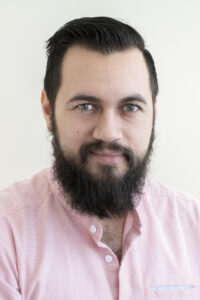
Sean Anderson
HPC UNIX Systems Administrator, Information Systems
Sean joined the HPC team in January 2020. His previous research experience helps him maintain the hundreds of scientific software packages that are available to users on the DEAC cluster. You will find him constantly compiling and optimizing codes, running benchmarks and tests, and coordinating with faculty and students about the use of various scientific codes and libraries. He is also a co-instructor on the Intro to HPC course offered by the Computer Science department. Sean obtained his Ph.D. in Optical Science in 2016, and has 10+ years working in scientific research, with emphasis on high performance computing, open software development for data analysis and visualization, material science, and first-principles calculations. Sean obtained his Ph.D. in Optical Science in 2016, and has 6+ years working in scientific research, with emphasis on material science, optical spectroscopy, first-principles calculations, and open software development for data analysis and visualization.
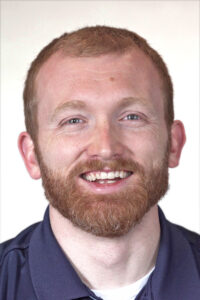
Adam Carlson
Unix Systems Administrator III, Information Systems
Adam Carlson has a degree in Computer Engineering and joined Wake Forest University in 2014. His primary efforts include architecting the DEAC Cluster hardware platform, advancing the configuration automation software used to maintain our servers, and upgrading cluster systems and firmware. He enjoys meeting with students and faculty to provide in-depth cluster training and troubleshooting, as well as providing instruction for the Intro to HPC class. Adam is also a huge advocate for wellness in the workplace and has previously served as the IS Wellness Ambassador. Outside of the workplace, Adam can often be found exercising outdoors, remodeling homes, and enjoying life with his wife, Elizabeth, while raising their three children.
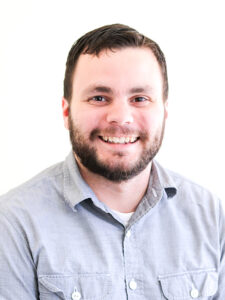
Cody Stevens
Senior Unix Systems Administrator, Information Systems
Cody came to Wake Forest University in 2009 where he earned his undergraduate and graduate degrees in Computer Science. He worked as the HPC intern in Summer 2014 before becoming a full member of the HPC Team in 2017. He now also holds a position in the Computer Science department, and is the lead instructor for the Intro to HPC course. His primary efforts relate to research and classroom support using Amazon Web Services, and building specific computing environments through software compilation and cloud services. He enjoys working with researchers to learn about their computational needs and discovering new technologies to support research across the University.
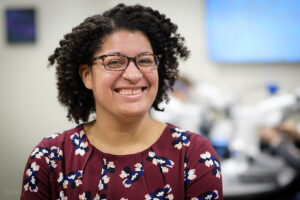
Regina Joice Cordy
Assistant Professor, Biology
Dr. Regina Joice Cordy is an Assistant Professor in the Biology Department at Wake Forest University. Dr. Cordy received her Ph.D. from Harvard University in 2013 and conducted Postdoctoral Research at Harvard T.H. Chan School of Public Health and Emory University. Her PhD work focused on the study of Plasmodium falciparum in human tissue using quantitative PCR and immunohistochemistry-based labeling approaches to localize parasites with respect to host cells and tissue microvasculature. This work led to the identification of an enrichment site of sexual stage parasites in the hematopoietic system of the bone marrow. Her postdoctoral work at Harvard and Emory focused on computational analysis of large data sets, including the microbiome within a public health context and metabolome of malaria-infected hosts. Dr. Cordy's current research focuses on investigating how fluctuations in blood metabolites and gut microbes affect malaria pathogenesis using a combination of computational, histological and in vitro approaches.
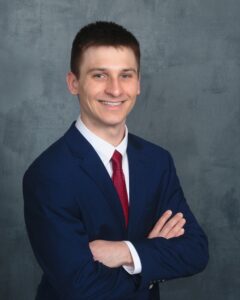
Robert Langefeld
Senior, Mathematics and Computer Science
Robert is a Senior Mathematics and Computer Science double major. He works in several research groups at Wake on topics related to machine learning, statistics, genomics, and high performance computing. In Wake's Intelligent Remote Sensing in Conservation & Discovery Group, his work includes object detection, image segmentation, 3D reconstruction, and statistical methods for understanding mining activity and its environmental impacts using remote sensing data. He is currently leading the lab's Student Research Team to teach students skills that enable them to conduct statistical and machine learning research. In the fall, Robert will join the MS program in the Department of Biostatistics at the University of Michigan with the intent to continue on to his Ph.D. He ultimately wants to conduct research in statistical genetics and multi-omics using high performance computing and machine learning.